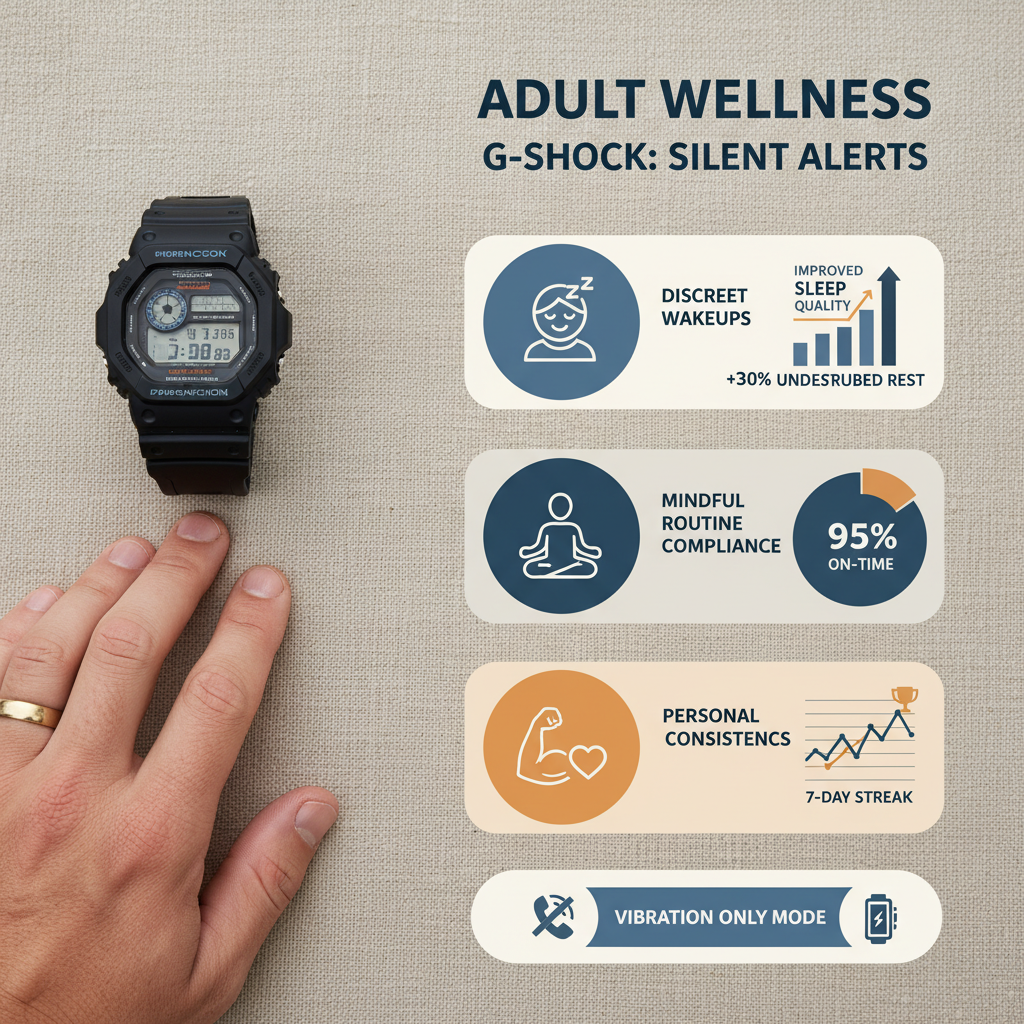
The concept of 'g shock with vibration alarm' is increasingly crucial in modern industrial safety and security protocols. Its importance stems from the need for reliable and robust alerting systems in challenging environments – from construction sites and manufacturing plants to hazardous material handling and emergency response scenarios. A well-implemented g shock with vibration alarm system mitigates risks, ensures worker safety, and minimizes potential downtime, impacting operational efficiency and regulatory compliance. Understanding the nuances of these systems is paramount for businesses seeking to prioritize safety and optimize their operations.
Globally, the demand for robust safety equipment, including those incorporating vibration alarm technology, is steadily rising, driven by stricter safety regulations and a heightened awareness of workplace hazards. The International Labour Organization (ILO) estimates that over 2.78 million workers die each year from occupational accidents and work-related diseases. Solutions like g shock with vibration alarm contribute to reducing these statistics by providing early warning signals and allowing for proactive intervention. Industries like oil and gas, mining, and construction are leading adopters, spurred by the severe consequences of incidents in these sectors.
At its core, 'g shock with vibration alarm' refers to a system designed to detect excessive vibration or impact and immediately trigger an alert. This alert can take the form of a visual signal (flashing light), an audible alarm (siren or buzzer), or a haptic feedback (vibration itself). The “g shock” component indicates the system’s ability to withstand significant physical shock and continue functioning reliably. The technology is not merely about detecting movement; it’s about providing a timely warning of potentially damaging or dangerous events, preventing accidents, and safeguarding equipment and personnel.
The Core Principles of g shock with vibration alarm
The fundamental principle behind g shock with vibration alarm systems lies in accurately detecting deviations from normal operating conditions. This involves sophisticated sensor technology capable of measuring acceleration, velocity, and displacement. The sensitivity of these sensors is crucial; they must be calibrated to differentiate between benign vibrations and those indicative of a potential problem. Effective systems also employ advanced signal processing algorithms to filter out noise and ensure accurate alarm triggering.
The 'g shock' aspect is paramount, meaning the entire system—sensors, housing, and electronics—must be able to withstand significant physical shocks and maintain functionality. This is particularly important in harsh environments where accidental impacts are common. A system that fails under duress provides no protection and can even create a false sense of security.
Global Industry Standards for g shock with vibration alarm
Internationally, several standards govern the design, testing, and implementation of vibration monitoring systems, impacting the effectiveness of a g shock with vibration alarm solution. IEC 60068-2-6 provides standardized methods for vibration and shock testing, ensuring product durability. ISO 10816-1 outlines guidelines for evaluating machine vibration levels and determining acceptable limits. These standards are critical for ensuring that systems meet safety requirements and provide reliable performance.
Furthermore, adherence to functional safety standards like IEC 61508 and IEC 61511 is increasingly important, especially in safety-critical applications. These standards address the entire lifecycle of safety-related systems, from design and development to installation, operation, and maintenance. Compliance with these standards demonstrates a commitment to safety and can significantly reduce the risk of accidents.
Regional regulations, such as those enforced by OSHA in the United States and the European Machinery Directive, also play a vital role. These regulations often specify requirements for vibration monitoring and alarm systems in specific industries and applications, mandating the use of certified equipment and adherence to best practices.
Understanding the Key Components of a g shock with vibration alarm System
A typical g shock with vibration alarm system comprises several core components working in unison. First is the vibration sensor (accelerometer), which converts mechanical vibration into an electrical signal. The sensor’s range and sensitivity are critical, determined by the specific application and expected vibration levels. Secondly, a signal conditioner amplifies and filters the sensor signal, preparing it for processing. This stage often includes noise reduction techniques.
Next, the microcontroller or processing unit analyzes the conditioned signal, comparing it to pre-defined thresholds. This unit is the “brain” of the system, determining when to trigger an alarm. Sophisticated systems utilize advanced algorithms to detect patterns and prevent false alarms. Finally, the alarm indicator provides a visual or audible alert. This can be a flashing light, a siren, a remote notification system, or a combination thereof.
The power supply and robust housing are also crucial. The housing protects the internal components from environmental factors such as dust, moisture, and physical impact, ensuring reliable operation. The power supply must be stable and capable of providing consistent power even in challenging environments.
Practical Applications of g shock with vibration alarm Across Sectors
The applications of g shock with vibration alarm are diverse and span across numerous industries. In manufacturing, these systems monitor the health of rotating machinery like pumps, fans, and compressors, detecting imbalances, misalignment, or bearing failures before they lead to catastrophic breakdowns. This enables predictive maintenance and reduces costly downtime.
In the mining and construction sectors, g shock with vibration alarm is used to monitor slope stability, detect ground movement, and ensure the safety of workers and equipment. This is particularly critical in areas prone to landslides or seismic activity. Systems can be deployed on heavy machinery to detect excessive stress and prevent accidents.
g shock with vibration alarm System Performance by Application
Advantages and Long-Term Value of Implementing g shock with vibration alarm
Implementing a g shock with vibration alarm system offers a multitude of benefits. Perhaps the most significant is improved safety, reducing the risk of accidents and injuries to personnel. Early detection of potential problems also leads to reduced downtime and lower maintenance costs through predictive maintenance strategies. This translates to increased productivity and profitability.
Beyond cost savings, a robust g shock with vibration alarm system enhances operational efficiency by optimizing equipment performance and extending its lifespan. It also demonstrates a commitment to responsible operations, bolstering a company's reputation and building trust with stakeholders. Furthermore, compliance with industry standards and regulations can be significantly simplified, minimizing the risk of fines and penalties.
Emerging Trends and Innovations in g shock with vibration alarm Technology
The field of g shock with vibration alarm is undergoing rapid innovation. The integration of wireless sensor networks (WSN) allows for remote monitoring and data collection, eliminating the need for costly cabling and enabling real-time analysis. Artificial intelligence (AI) and machine learning (ML) are being used to analyze vibration data, identify subtle anomalies, and predict failures with greater accuracy.
Edge computing is another emerging trend, bringing processing power closer to the sensors themselves, enabling faster response times and reducing reliance on cloud connectivity. Furthermore, the development of more robust and miniaturized sensors is expanding the range of applications for g shock with vibration alarm systems.
Finally, the increasing focus on sustainability is driving the development of energy-efficient sensors and systems, reducing the environmental impact of vibration monitoring.
Common Challenges and Innovative Solutions for g shock with vibration alarm
Despite the advancements, several challenges remain in implementing effective g shock with vibration alarm systems. One common issue is false alarms, which can be caused by environmental noise, improper sensor calibration, or flawed algorithms. Sophisticated signal processing techniques and AI-powered anomaly detection can help mitigate this.
Data management and analysis can also be complex, especially in large-scale deployments. Cloud-based platforms and data analytics tools can streamline data collection, storage, and analysis, providing actionable insights. Another challenge is ensuring system reliability in harsh environments. Using robust, sealed sensors and housings, along with redundant systems, can enhance resilience.
Finally, integration with existing systems can be a hurdle. Open communication protocols and standardized interfaces are crucial for seamless integration with existing control systems and data platforms.
Summary of Challenges and Solutions for g shock with vibration alarm Implementation
| Challenge |
Impact on g shock with vibration alarm Performance |
Proposed Solution |
Expected Outcome |
| False Alarms |
Reduced trust in the system; wasted resources |
AI-powered anomaly detection; advanced filtering |
Improved accuracy; reduced response time |
| Data Management Complexity |
Difficulty in identifying trends; slow decision-making |
Cloud-based data analytics platforms |
Streamlined data analysis; faster insights |
| Harsh Environment Reliability |
Sensor failure; inaccurate readings |
Robust, sealed sensors; redundant systems |
Increased uptime; accurate data |
| Integration Challenges |
Data silos; limited functionality |
Open communication protocols; standardized interfaces |
Seamless integration; enhanced functionality |
| Sensor Calibration |
Inaccurate readings; unreliable alerts |
Automated calibration routines; remote calibration |
Improved accuracy; reduced maintenance |
| Power Consumption |
Limited battery life; frequent replacements |
Energy-efficient sensors; optimized power management |
Extended battery life; reduced costs |
FAQS
A basic vibration sensor simply detects vibration and outputs a signal. A g shock with vibration alarm system includes that sensor, but also adds signal conditioning, a microcontroller for analysis, pre-set thresholds, and an alarm indicator (visual or audible). The 'g shock' aspect ensures the system’s resilience in demanding environments. It's a complete solution for proactive monitoring and safety.
Calibration frequency depends on the application and environmental conditions. Typically, sensors should be calibrated at least annually, but more frequently in harsh environments or if accuracy is critical. Some advanced systems offer automated calibration routines to simplify the process and ensure ongoing accuracy. Routine inspection and logging of sensor data can also help identify potential drift.
Look for certifications like IECEx, ATEX (for hazardous areas), and ISO certifications demonstrating compliance with quality and safety standards. Depending on your industry and location, specific certifications may be required by regulatory bodies. Ensure the system meets the relevant safety standards for its intended application.
Yes, many g shock with vibration alarm systems are designed for seamless integration with Supervisory Control and Data Acquisition (SCADA) and Distributed Control Systems (DCS). Compatibility is typically achieved through standard communication protocols like Modbus, Ethernet/IP, or OPC UA. This integration allows for centralized monitoring and control, and automated response to alarm events.
Several factors influence sensor performance. Mounting location, surface material, and the presence of external noise can all affect readings. Sensor type (e.g., piezoelectric, MEMS) and its inherent sensitivity also play a role. Proper sensor selection, mounting, and signal conditioning are crucial for achieving optimal performance and accurate detection of relevant vibrations.
The lifespan of a sensor varies depending on the environment and usage, but typically ranges from 5-10 years. Regular visual inspections, checking cable connections, and periodic calibration are essential maintenance tasks. In harsh environments, more frequent inspections and potential sensor replacement may be necessary to ensure reliable operation. Monitoring the sensor’s output signal can also indicate degradation.
Conclusion
In conclusion, g shock with vibration alarm systems are indispensable tools for enhancing safety, improving operational efficiency, and reducing costs across a wide range of industries. The ability to proactively detect and respond to potential problems before they escalate offers significant benefits, from preventing accidents and minimizing downtime to extending equipment lifespan and ensuring regulatory compliance. The continuous innovation in sensor technology, data analytics, and wireless communication is further expanding the capabilities and applications of these systems.
Looking ahead, the integration of AI and machine learning will play an increasingly important role in optimizing vibration monitoring and predictive maintenance. Embracing these advancements will enable businesses to unlock even greater value from g shock with vibration alarm systems, creating safer, more efficient, and more sustainable operations. Visit our website at g shock with vibration alarm to learn more about our comprehensive solutions.